
Glaucoma Treatment in Dubai: Modern Options for Protecting Long-Term Vision
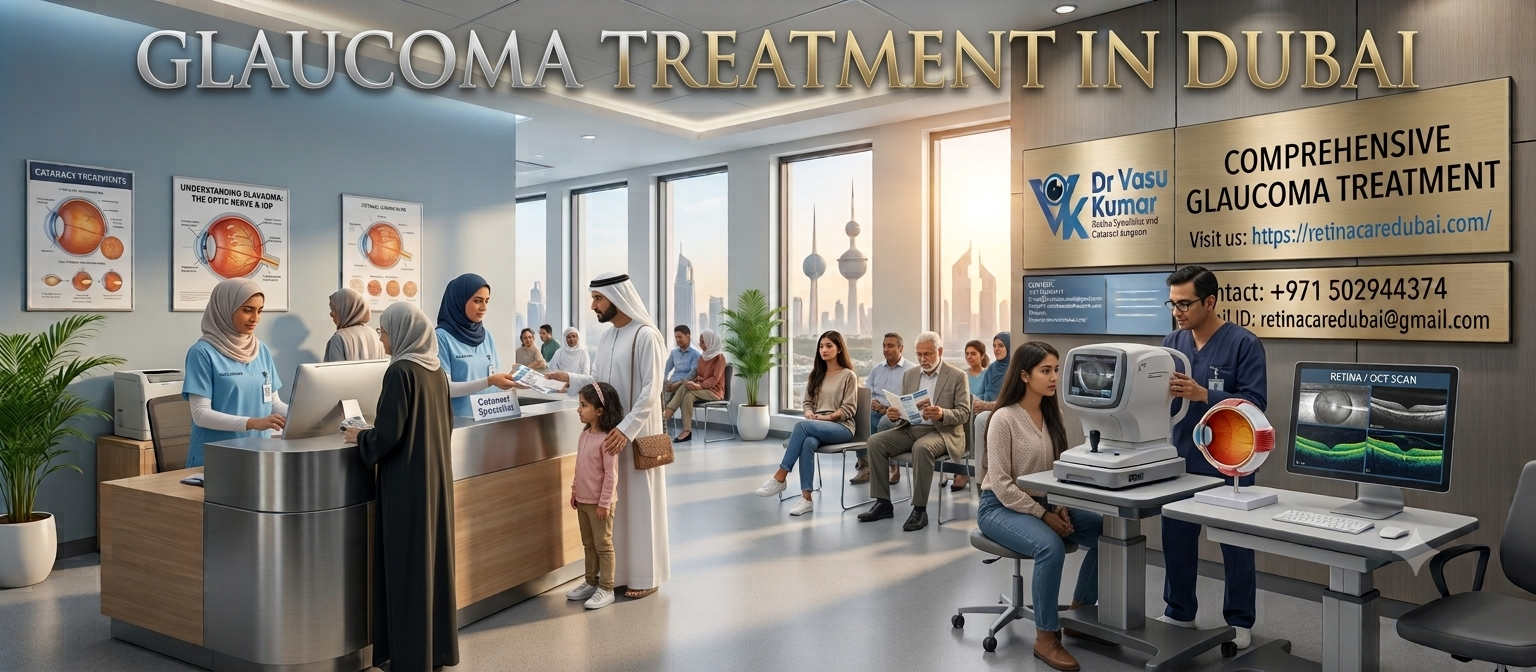
Glaucoma is a progressive eye condition that can damage the optic nerve and gradually affect vision. Because early glaucoma may develop without obvious symptoms, many people do not realize they have it until significant damage has occurred. The good news is that timely diagnosis, appropriate monitoring, and effective treatment can help slow or prevent further vision loss. If you are researching glaucoma treatment in Dubai, understanding the available options can help you make informed decisions about your eye health. According to established ophthalmology guidance, glaucoma care focuses mainly on controlling intraocular pressure (IOP), while regularly monitoring the optic nerve and visual field.
What Is Glaucoma?
Glaucoma refers to a group of eye diseases that cause progressive damage to the optic nerve, which carries visual information from the eye to the brain. Increased eye pressure is an important risk factor, although glaucoma can sometimes occur even when IOP is within the statistically normal range.
Why Early Detection Matters
Glaucoma-related optic nerve damage cannot generally be reversed. Treatment is therefore designed to protect remaining vision and reduce the risk of future progression. Regular examinations can identify pressure changes, optic nerve abnormalities, or visual field loss before noticeable symptoms appear.
How Is Glaucoma Diagnosed in Dubai?
A detailed glaucoma assessment involves more than simply checking eye pressure. Depending on the patient's condition and risk factors, an ophthalmologist may recommend:
-
Tonometry to measure intraocular pressure
-
Visual field testing to identify functional vision loss
-
Optical nerve and retinal nerve fibre layer imaging
-
Gonioscopy to examine the drainage angle
-
Pachymetry to measure corneal thickness
-
Detailed examination of the optic nerve
These tests provide complementary information. A reliable treatment plan should consider the patient's optic nerve appearance, pressure, visual field, disease stage, and risk of progression rather than relying on one measurement alone.
Glaucoma Treatment in Dubai: What Are the Main Options?
The right treatment depends on the type and severity of glaucoma, current IOP, optic nerve health, previous treatment, and individual risk factors. There is no single treatment that is appropriate for every patient.
1. Prescription Glaucoma Eye Drops
Eye drops are commonly used to lower IOP. Different medicines work by reducing fluid production inside the eye or improving fluid drainage. Prostaglandin analogues are among the commonly used medical treatments for open-angle glaucoma.
Patients should use prescribed drops consistently and should not stop or change them without discussing it with their ophthalmologist. Correct administration is also important because missed doses can reduce treatment effectiveness.
2. Selective Laser Trabeculoplasty
Selective laser trabeculoplasty (SLT) is a laser procedure used mainly for suitable patients with open-angle glaucoma or ocular hypertension. It works on the eye's drainage system to improve fluid outflow and reduce IOP.
Evidence reviewed by the American Academy of Ophthalmology supports SLT as an effective long-term option that may be used as primary treatment, as an alternative to medication, or alongside glaucoma drops in appropriate patients.
3. Laser Treatment for Angle-Closure Risk
Some patients with narrow or closed drainage angles may require a different laser approach, such as laser peripheral iridotomy. The procedure creates a small opening in the iris to improve the movement of fluid and address the mechanism contributing to angle closure. The specific procedure should be selected after a detailed examination of the drainage angle.
4. Glaucoma Surgery
When medication and laser treatment do not provide adequate pressure control, surgery may be considered. Depending on the patient's condition, options can include filtering surgery or glaucoma drainage devices. Surgical treatment is generally considered when the expected benefit of better IOP control outweighs the risks of intervention.
Comparing Glaucoma Treatment Options
| Treatment | Main Purpose | Common Role | Key Consideration |
|---|---|---|---|
| Eye drops | Lower IOP | Often used early | Requires regular use |
| SLT | Improve fluid drainage | Suitable open-angle cases | Not appropriate for every glaucoma type |
| Laser iridotomy | Address angle-closure mechanism | Narrow/closed angles | Requires angle assessment |
| Glaucoma surgery | Achieve stronger IOP control | Advanced or uncontrolled disease | Requires careful follow-up |
How to Choose the Right Glaucoma Care
Choosing a glaucoma specialist should involve more than comparing treatment prices. Consider:
-
Comprehensive diagnosis: Ask whether the evaluation includes pressure measurement, optic nerve assessment, visual field testing, and appropriate imaging.
-
Disease-specific treatment: Treatment should be based on glaucoma type and severity.
-
Long-term monitoring: Glaucoma is generally a chronic condition, so follow-up is an important part of care.
-
Clear communication: You should understand your target IOP, prescribed treatment, possible side effects, and follow-up schedule.
-
Treatment flexibility: A good management plan can be adjusted when pressure, visual fields, medication tolerance, or disease progression changes.
A Practical Point for Patients
Do not judge glaucoma control solely by whether your eyesight feels normal. Peripheral vision can be affected gradually, and early disease may not produce noticeable symptoms. Regular testing gives the ophthalmologist objective information to determine whether treatment is working.
When Should You Seek an Eye Examination?
People with a family history of glaucoma, elevated eye pressure, older age, previous eye problems, or other recognized risk factors may benefit from regular glaucoma screening. Anyone experiencing sudden severe eye pain, blurred vision, halos around lights, headache, nausea, or rapid visual changes should seek urgent medical assessment because some forms of angle-closure glaucoma can require prompt treatment.
Frequently Asked Questions About Glaucoma Treatment in Dubai
1. What is the main goal of glaucoma treatment?
The primary goal is to lower eye pressure to a level appropriate for the individual patient and reduce the risk of further optic nerve damage.
2. Can glaucoma be completely cured?
Glaucoma damage cannot generally be reversed. However, appropriate treatment and monitoring can help preserve remaining vision and slow disease progression.
3. Is glaucoma treatment always based on eye pressure?
No. IOP is important, but doctors also consider optic nerve appearance, visual field results, corneal thickness, drainage-angle anatomy, and evidence of progression.
4. Are glaucoma eye drops effective?
Yes. Prescription eye drops are widely used to reduce IOP and may be an important part of long-term glaucoma management.
5. Can laser treatment replace glaucoma eye drops?
For selected patients, laser treatment such as SLT can be used as an alternative to or alongside medication. Suitability depends on the type and stage of glaucoma.
6. Is SLT suitable for every glaucoma patient?
No. SLT is primarily used for suitable open-angle glaucoma or ocular hypertension cases. Other glaucoma types may require different treatment.
7. Does glaucoma surgery restore lost vision?
No. Surgery is intended to control eye pressure and protect remaining optic nerve function; it does not restore optic nerve damage that has already occurred.
8. How often should glaucoma patients have follow-up examinations?
The interval varies according to disease severity, pressure control, treatment, and risk of progression. Your ophthalmologist should establish an individualized follow-up schedule.
9. Can glaucoma occur with normal eye pressure?
Yes. Some people develop optic nerve damage despite IOP measurements that are not considered unusually high, which is why comprehensive assessment is important.
10. Should I stop glaucoma drops when my pressure improves?
No. A lower pressure may indicate that treatment is working. Medication should only be changed or stopped after consultation with the treating ophthalmologist.
Conclusion: Protect Your Vision With Timely Glaucoma Care
Finding the right glaucoma treatment in Dubai starts with an accurate diagnosis and continues with personalized treatment and consistent monitoring. From prescription eye drops and laser procedures to surgical options for more complex disease, modern glaucoma management provides several ways to control IOP and protect remaining vision. The most appropriate approach depends on your individual eye health, glaucoma type, disease stage, and treatment response. For professional evaluation and personalized glaucoma care, consult the specialists at RetinaCareDubai and discuss your diagnosis, treatment choices, and long-term monitoring plan. Early attention can make a meaningful difference in protecting your vision.
Contact - +971 502944374
Email ID - retinacaredubai@gmail.com
Website - https://retinacaredubai.com/

 English
 Arabic
 Spanish
 Portuguese
 Deutsch
 Turkish
 Dutch
Dutch
 Italiano
 Russian
 Romaian
 Portuguese (Brazil)
 Greek
Greek