
Understanding Canadian Research Peptides in Modern Laboratory Science
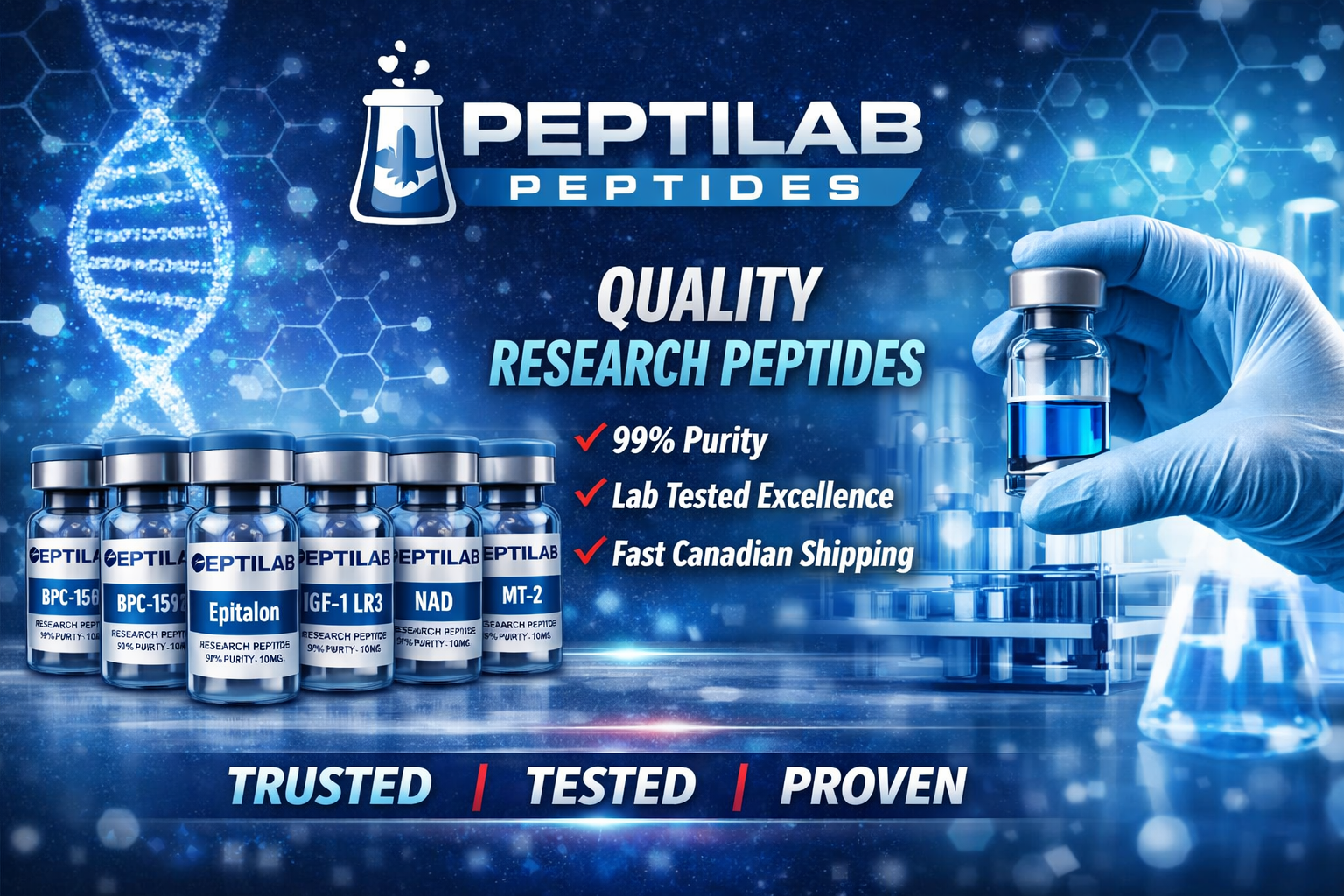
Peptide research continues to contribute to developments across molecular biology, biochemistry, biotechnology, and related scientific fields. Researchers investigate peptides to better understand molecular interactions, cellular signaling, protein behavior, and other biological processes.
For laboratories exploring Canadian research peptides, evaluating material quality, documentation, traceability, and responsible handling is an important part of developing reliable research workflows.
What Are Research Peptides?
Peptides are short chains of amino acids linked by peptide bonds. Their unique sequences and structures can produce diverse molecular properties, making them valuable subjects for controlled laboratory investigation.
Research applications may involve studying molecular pathways, protein interactions, receptor activity, or other biochemical mechanisms. The appropriate material depends on the scientific objective and experimental protocol.
Why Documentation Matters
Laboratory research benefits from clear and accurate material records. Researchers may need information about the identity, characteristics, testing, and storage of a peptide before incorporating it into an experimental workflow.
Relevant documentation may include:
- Peptide identity
- Sequence or molecular information
- Purity or analytical data
- Batch or lot number
- Certificate of Analysis
- Storage requirements
- Handling information
Reviewing this information can help qualified researchers determine whether a material aligns with their specific research requirements.
The Importance of Analytical Testing
Analytical testing can provide useful information about peptide materials. Different techniques are designed to examine different characteristics.
High-performance liquid chromatography, for example, may provide chromatographic information relevant to purity, while mass spectrometry can provide information related to molecular mass and support identity assessments.
Researchers should consider the testing methodology and its limitations when interpreting analytical results.
Batch Traceability
Batch or lot information is an important part of laboratory material tracking. Researchers should verify that analytical documentation corresponds to the specific batch being evaluated.
Maintaining batch records can help laboratories identify materials used in particular experiments and investigate potential sources of variation when results differ.
Evaluating Canadian Research Resources
Researchers looking for Canadian research resources should evaluate more than product availability. Technical specifications, analytical documentation, storage information, labeling, and transparent communication can all contribute to a more informed assessment.
PeptiLab.ca provides research-focused peptide products and scientific resources. Qualified researchers should review individual product documentation and independently determine whether specific materials are appropriate for their research protocols.
Supporting Reproducible Research
Reproducibility is a fundamental principle of scientific research. While research materials are only one part of an experiment, consistent documentation can help researchers control and understand experimental variables.
Laboratories can record product identifiers, batch numbers, analytical information, storage conditions, preparation methods, and relevant experimental parameters.
These records can provide useful context when experiments are repeated or unexpected findings need to be investigated.
Storage and Handling
Peptides may have specific storage requirements depending on their characteristics and formulation. Temperature, moisture, light exposure, and other environmental factors can affect certain materials.
Researchers should follow applicable technical documentation and institutional procedures. Laboratory peptides should be handled only by appropriately trained personnel in suitable research environments.
Responsible Scientific Practices
Responsible research involves more than selecting laboratory materials. Laboratories should maintain appropriate safety procedures, accurate labeling, suitable storage systems, protective equipment, and waste-management practices.
Researchers should also follow institutional policies, relevant safety documentation, and applicable Canadian and other jurisdictional requirements relevant to their work.
Looking Ahead
Canadian research continues to contribute to developments in biotechnology and life-science research. As analytical technologies and molecular biology techniques become more sophisticated, researchers will increasingly rely on detailed characterization and careful material documentation.
Strong laboratory practices can help researchers make better use of available scientific resources while maintaining appropriate standards for research quality and safety.
Final Thoughts
Canadian research peptides can be relevant to a broad range of laboratory investigations. However, responsible evaluation requires attention to identity, analytical information, batch traceability, documentation, storage, and intended research application.
By combining carefully documented research materials with appropriate laboratory procedures and thorough recordkeeping, researchers can support more organized, consistent, and responsible scientific investigation.
This article is for general informational purposes only and does not provide medical, diagnostic, or therapeutic advice. Research peptides should be handled only by appropriately trained personnel and in accordance with applicable laboratory procedures, institutional requirements, safety practices, and regulations.

 English
 Arabic
 Spanish
 Portuguese
 Deutsch
 Turkish
 Dutch
Dutch
 Italiano
 Russian
 Romaian
 Portuguese (Brazil)
 Greek
Greek