
Plastic Injection Mold Tooling: A Complete Guide for Modern Plastic Manufacturing
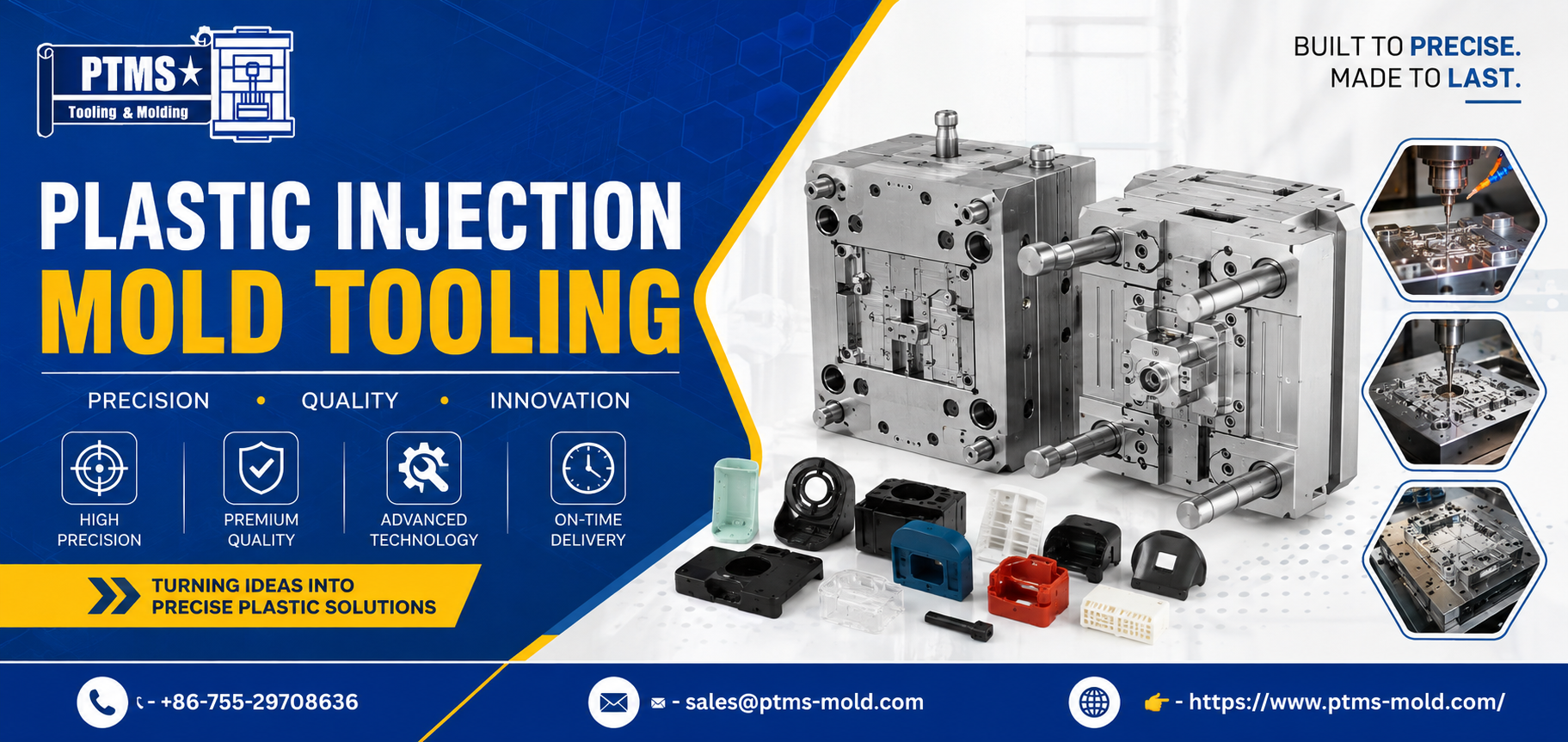
Plastic manufacturing depends on precision, consistency, and reliable production processes. At the center of many successful injection molding projects is Plastic Injection Mold Tooling . The quality of the mold directly affects the appearance, dimensions, cycle time, durability, and overall cost of molded plastic parts.
Whether you are developing automotive components, electronic housings, medical products, consumer goods, or industrial parts, understanding how injection mold tooling works can help you make better manufacturing decisions.
What Is Plastic Injection Mold Tooling?
Plastic Injection Mold Tooling refers to the design, engineering, machining, assembly, and testing of molds used to manufacture plastic components through injection molding. The mold contains specially machined cavities that determine the shape and features of the finished part.
During injection molding, plastic resin is heated until it becomes molten. The material is then injected into the mold under controlled pressure. After cooling and solidifying, the mold opens and an ejection system removes the finished component.
A typical injection mold may include:
-
Core and cavity sections
-
Runner and gating systems
-
Cooling channels
-
Ejector pins
-
Guide pillars and bushings
-
Inserts
-
Sliders and lifters
-
Venting systems
Every component has a specific purpose, and proper coordination between these elements is essential for dependable production.
Why Is Mold Tooling Important?
A mold is much more than a cavity that creates a plastic shape. It is a precision manufacturing system that influences almost every stage of production.
High-quality tooling can help manufacturers achieve:
-
Consistent part dimensions
-
Improved surface finishes
-
Stable production cycles
-
Lower scrap rates
-
Better material utilization
-
Reduced maintenance problems
-
Longer mold service life
-
Reliable high-volume production
Poorly designed tooling, on the other hand, can lead to flash, warping, sink marks, short shots, difficult ejection, uneven filling, and inconsistent dimensions.
How Does the Mold Tooling Process Work?
Developing an injection mold involves several carefully controlled stages. Each step contributes to the performance and reliability of the final tool.
1. Product Design Analysis
The process begins with an evaluation of the product design. Engineers review the CAD model, dimensions, tolerances, wall thickness, ribs, bosses, undercuts, and cosmetic requirements.
This stage helps identify potential manufacturing challenges before money is invested in tooling.
2. Design for Manufacturing Analysis
Design for Manufacturing, commonly called DFM, is an important part of the tooling process. Engineers examine whether the product can be molded efficiently and consistently.
They may recommend adjustments to:
-
Wall thickness
-
Draft angles
-
Parting-line location
-
Gate position
-
Rib design
-
Ejection areas
-
Undercut features
Making these changes during the design stage is usually easier and less expensive than modifying a completed mold.
3. Mold Design
After the product design is confirmed, engineers create the detailed mold design. The core, cavity, runners, gates, cooling system, and ejection mechanism are developed according to the product requirements.
For complicated components, sliders, lifters, inserts, or other specialized mechanisms may be required.
4. CNC Machining and EDM
Once the mold design is approved, manufacturing begins. Precision equipment such as CNC machining centers and EDM machines is used to create the required mold components.
Machining accuracy is essential because even small errors can affect the dimensions and performance of the finished plastic part.
5. Mold Assembly
After individual components are manufactured and inspected, they are assembled into a complete mold.
Engineers check the movement of the mold, alignment of components, ejection system, cooling channels, and other mechanisms before testing.
6. Mold Testing and Trial Production
The completed mold is tested using the intended plastic material and molding conditions. Trial production allows engineers to evaluate filling, cooling, ejection, appearance, and dimensional accuracy.
If problems are identified, adjustments can be made before the mold enters full-scale production.
Types of Plastic Injection Mold Tooling
Different products require different mold configurations. The correct choice depends on production volume, part geometry, material, budget, and expected mold life.
Single-Cavity Molds
A single-cavity mold produces one part per cycle. It can be a practical option for prototypes, lower-volume production, or large components.
Multi-Cavity Molds
Multi-cavity tooling contains several cavities and produces multiple parts during each molding cycle. It is particularly useful for high-volume manufacturing because it can increase production output.
Family Molds
Family molds are designed to produce multiple related components within one mold. They can be useful when several parts are required for the same product assembly, although cavity balancing and filling behavior require careful engineering.
Hot Runner Molds
Hot runner systems keep plastic material inside heated runners, reducing or eliminating conventional cold-runner waste. They can be advantageous for high-volume applications and certain material or cosmetic requirements.
What Factors Affect Tooling Cost?
The price of an injection mold depends on many factors rather than simply its physical size.
Important cost factors include:
-
Part complexity: Complex geometries require more engineering and specialized mechanisms.
-
Number of cavities: More cavities generally increase manufacturing and balancing requirements.
-
Mold material: Steel grades and other tooling materials vary in price and performance.
-
Surface finish: Polishing, texturing, and cosmetic requirements can add processing time.
-
Tolerance requirements: Tight tolerances require greater machining and inspection precision.
-
Production volume: Expected output influences the appropriate tooling construction and durability.
-
Automation: Advanced hot-runner systems and automated mechanisms can increase the initial investment.
The cheapest mold is not always the most economical solution. A properly designed tool can provide better reliability, longer service life, and lower production costs over thousands or millions of cycles.
How to Choose the Right Tooling Manufacturer
Selecting a tooling partner should involve more than comparing quotations. Manufacturers should evaluate the supplier's engineering capabilities, equipment, quality processes, communication, and production experience.
Before making a decision, consider:
-
Previous mold-making experience
-
DFM expertise
-
CNC and EDM capabilities
-
Quality inspection procedures
-
Mold-flow analysis capabilities
-
Trial molding facilities
-
Experience with engineering plastics
-
Maintenance and repair support
-
Ability to meet required tolerances
-
Experience with similar components
A capable tooling manufacturer should also communicate clearly about design decisions, expected lead times, potential risks, and tooling requirements.
Common Problems in Injection Mold Tooling
Even well-planned projects can experience tooling challenges if important design factors are overlooked.
Common problems include:
Flash
Excess plastic can escape between mold surfaces, creating unwanted thin material around the part.
Warpage
Uneven cooling or material shrinkage can cause the finished part to deform.
Sink Marks
Thicker sections may cool differently from thinner sections, creating visible depressions on the surface.
Short Shots
Insufficient filling can occur when the molten plastic does not completely fill the cavity.
Difficult Ejection
Poor draft, unsuitable ejector locations, or excessive friction can make part removal difficult.
Many of these problems can be reduced through proper product design, mold engineering, material selection, and process optimization.
How Can Businesses Improve Mold Performance?
A successful tooling project should consider the entire production lifecycle rather than only the initial mold price.
Businesses can improve performance by:
-
Conducting DFM reviews before tool manufacturing
-
Selecting suitable mold materials
-
Optimizing gate locations
-
Designing effective cooling channels
-
Using appropriate draft angles
-
Planning preventive mold maintenance
-
Monitoring part dimensions during production
-
Keeping critical spare components available
Regular maintenance is especially important for high-volume molds. Cleaning, lubrication, inspection, and replacement of worn components can help maintain consistent performance.
Frequently Asked Questions
What is Plastic Injection Mold Tooling?
It is the engineering and manufacturing process used to create molds for producing plastic parts through injection molding.
How long does injection mold tooling take?
Lead time depends on mold size, complexity, cavity count, material, surface finish, and testing requirements. Simple tools can be completed faster than complex multi-cavity molds.
What materials are used to make injection molds?
Steel is widely used because of its strength and durability. Aluminum and other materials can also be suitable for specific applications.
Why is DFM important?
DFM helps identify potential molding problems before the mold is manufactured, reducing the risk of expensive modifications later.
What is a multi-cavity mold?
It is a mold containing multiple cavities that can produce several identical parts during one molding cycle.
What causes warpage?
Warpage can result from uneven cooling, material shrinkage, part geometry, processing conditions, or inappropriate mold design.
Are complex plastic parts suitable for injection molding?
Yes. Specialized mold mechanisms such as sliders, lifters, and inserts can make many complex designs manufacturable.
How can injection mold costs be reduced?
Optimizing part geometry, selecting the correct cavity configuration, reducing unnecessary complexity, and performing DFM analysis early can help control tooling costs.
Why is cooling important?
Effective cooling helps control the molding cycle and contributes to consistent part quality and dimensional stability.
What information is needed for a tooling quotation?
Manufacturers generally need the CAD model or drawings, plastic material, estimated production volume, tolerances, surface requirements, and other important product specifications.
Conclusion
Plastic Injection Mold Tooling is the foundation of efficient and repeatable plastic injection molding. From product analysis and DFM to precision machining, mold assembly, testing, and maintenance, every stage contributes to the quality and reliability of the finished part.
For businesses seeking dependable tooling, the right manufacturing partner can help reduce development risks, improve production consistency, and create a mold that delivers long-term value. PtmsMoldprovides tooling-focused solutions designed around precision, quality, and practical manufacturing requirements. Contact the team to discuss your next plastic molding project and turn your product design into a production-ready solution.
📞 - +86-755-29708636
👉 - https://www.ptms-mold.com/

 Arabic
 French
 Spanish
 Portuguese
 Deutsch
 Turkish
 Dutch
Dutch
 Italiano
 Russian
 Romaian
 Portuguese (Brazil)
 Greek
Greek