
Operational Resilience: Managing Capital Risk Through Commercial Hardscaping in Maryland
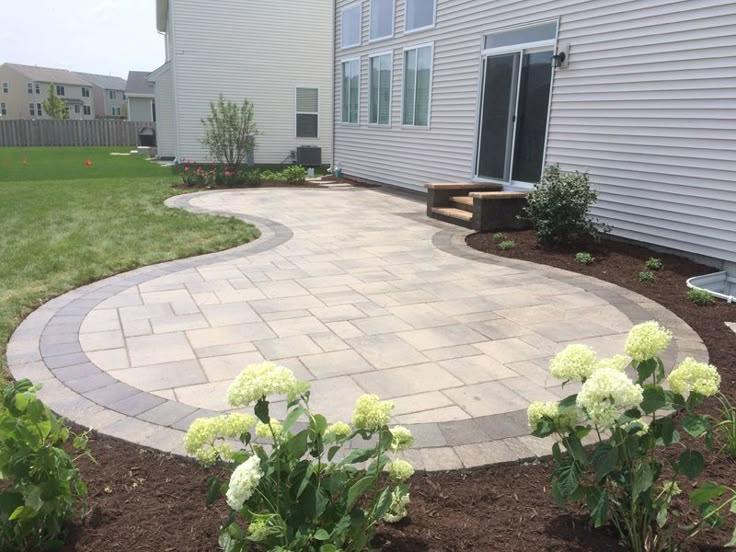
Facility managers, regional operations directors, and commercial developers across Maryland face a subtle operational challenge: the exterior footprint of a property is often its most unmanaged risk vector. While indoor mechanicals, HVAC units, and structural roofing undergo strict preventative maintenance schedules, exterior flatwork and site masonry are frequently overlooked until a safety claim occurs or municipal non-compliance fines hit.
NIP Group
In dynamic commercial environments—such as distribution hubs along the I-95 corridor, healthcare campuses in Baltimore, or government office parks in Prince George’s County—treating exterior stone and concrete as operational infrastructure rather than mere decoration is essential. Strategic investments in engineered commercial hardscaping maryland allow commercial asset managers to mitigate risk, streamline ongoing maintenance budgets, and ensure long-term structural resilience.
The Operational Reality: Hardscapes as Functional Infrastructure
From a facility operations standpoint, hardscaping serves as the primary interface between vehicles, pedestrians, and a building's foundation. Substandard or degrading site surfaces trigger cascading operational disruptions:
-
Unmanaged Slip-and-Fall Claims: Uneven poured concrete slabs, settled brick pathways, and improper water drainage near entryways represent major liability threats. High-compressive-strength, non-slip paver assemblies eliminate frost-heave ledges and maintain flat, ADA-compliant walking routes.
-
Frequent Asphalt & Concrete Replacement: Standard asphalt requires frequent resurfacing, crack filling, and repaving. Interlocking commercial paver installations distribute heavy vehicle axle loads far more effectively, isolating repairs to individual units without requiring full-scale site closures.
-
Foundation Sub-Base Erosion: Uncontrolled water runoff along building perimeters weakens soil bearing capacities. Heavy-duty retaining walls and engineered grading direct water safely away from foundations and underground utility corridors.
Strategic Commercial Hardscape Engineering Applications
1. High-Density Interlocking Drive Lanes & Loading Plazas
Industrial facilities, logistics parks, and high-traffic retail centers subject site surfaces to relentless weight cycles. High-PSI commercial concrete pavers resist oil penetration, thermal cracking, and heavy vehicular rutting. Additionally, when underground utility maintenance is required, pavers can be removed and re-set without leaving unsightly asphalt patches.
2. Engineered Segmental Retaining Walls (SRWs)
Maryland’s varied coastal and rolling topography frequently requires heavy earth retention. Segmental retaining wall systems utilize geogrid soil reinforcement to hold back thousands of pounds of soil pressure around multi-level parking garages, loading docks, and perimeter boundaries. These walls convert previously unusable, sloped acreage into productive operational square footage.
3. Permeable Interlocking Concrete Pavement (PICP) for Stormwater Compliance
Managing stormwater is one of Maryland’s strictest regulatory requirements. In counties within the Chesapeake Bay Watershed, exceeding impervious surface thresholds triggers steep municipal fees and costly detention basin requirements. Permeable pavers act as an active filtration system, allowing water to pass through joint aggregates into a subterranean storage bed, fulfilling local environmental mandates while maintaining a fully usable surface.
Pleasants Construction
4. Heavy-Duty Perimeter Barriers & Integrated Masonry Security
Security and site control are top priorities for government contractors, corporate headquarters, and distribution centers. Built-in masonry planters, retaining walls, and custom stone pillars double as architectural perimeter protection, replacing institutional-looking metal barriers with high-end, aesthetic security measures.
Life-Cycle Cost Comparison: Standard Surfaces vs. Engineered Hardscapes
Investing in commercial-grade stone masonry delivers a lower total cost of ownership (TCO) over a 30-year operational life cycle:
|
Operational Factor |
Poured Concrete / Asphalt |
Commercial Interlocking Hardscape |
|
Initial Capital Expenditure (CapEx) |
Moderate |
Higher upfront investment |
|
Expected Structural Lifespan |
10–15 Years |
30–50+ Years |
|
Utility Access Repairs |
Requires jackhammering & ugly patches |
Seamless unit removal & re-setting |
|
Freeze-Thaw / Salt Resistance |
High susceptibility to spalling & cracking |
Engineered freeze-thaw and salt resilience |
|
Stormwater Mitigation Capability |
Minimal (High surface runoff) |
High (Integrated permeable technology) |
Navigating Maryland’s Municipal & Site Regulations
Constructing durable commercial hardscapes in Maryland requires careful coordination with state and local authorities. From sediment and erosion control permits to ADA accessibility standards and local zoning setbacks, executing a major installation demands an experienced team.
Pleasants Construction
A qualified commercial contractor manages the entire project pipeline—including soil compaction testing, civil engineering approvals, hydrological site modeling, and precision installation—ensuring your project is completed on schedule and fully compliant with state regulations.
Protect and Enhance Your Commercial Portfolio
Upgrading your commercial grounds with engineered hardscaping is a strategic investment in safety, compliance, and asset longevity. By eliminating liability risks and reducing ongoing maintenance demands, high-end hardscaping delivers a functional return on investment while presenting a clean, professional face to the public.
 Deutsch
 English
 Arabic
 French
 Spanish
 Portuguese
 Turkish
 Dutch
Dutch
 Italiano
 Russian
 Romaian
 Portuguese (Brazil)
 Greek
Greek