A properly paved surface can make a major difference in the appearance, functionality, and value of a residential or commercial property. Asphalt Paving Long Island is a popular choice for homeowners and businesses because asphalt can provide a smooth, durable, and practical surface for driveways, parking areas, private roads, and other paved spaces. However, a successful asphalt project depends on much more than simply spreading asphalt over the ground. Proper site evaluation, excavation, grading, base preparation, drainage, material selection, and compaction all influence how the finished pavement performs. Long Island properties also experience changing weather, including rain, snow, freezing temperatures, summer heat, and repeated seasonal changes, which can affect pavement over time. A well-planned asphalt project takes these conditions into consideration and focuses on building a strong foundation beneath the visible surface. Whether you are installing a new driveway, replacing an aging pavement, or repairing existing asphalt, understanding the paving process can help you make a more informed decision.
Why Is Asphalt Paving Popular on Long Island?
Asphalt is widely used for residential and commercial paving because it combines a smooth appearance with practical performance. It can handle regular vehicle traffic and can be installed for a variety of applications, including driveways, parking lots, private roads, and walkways. Local paving companies describe asphalt as a cost-effective and durable option for Long Island properties, particularly when it is installed over a properly prepared base. Asphalt also provides a clean black surface that can complement landscaping and the exterior of a home. Another advantage is that asphalt can be repaired, resurfaced, or maintained in appropriate circumstances instead of automatically requiring complete replacement. However, its performance depends heavily on installation quality. A weak foundation or poor drainage can cause problems even when high-quality asphalt is used. For this reason, homeowners should evaluate the complete paving system rather than focusing only on the surface material.
How Is an Asphalt Driveway Installed?
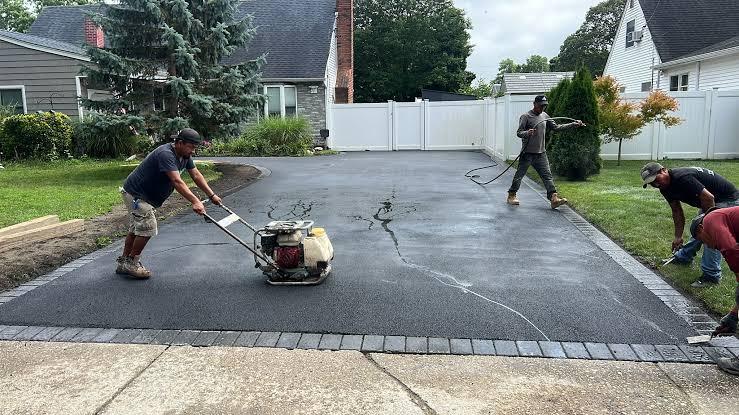
A professional asphalt driveway installation generally begins with evaluating the property and determining the appropriate layout, elevation, slope, and drainage requirements. If an old driveway is present, deteriorated material may need to be removed before construction begins. The soil is then excavated and graded as necessary, followed by installation and compaction of a suitable aggregate base. Local paving contractors describe site assessment, excavation, subgrade preparation, base installation, asphalt placement, and final drainage checks as important stages of the process. Once the foundation is ready, the asphalt mixture is placed and compacted to create a dense and even surface. The exact construction method depends on the property's conditions, expected traffic, and project requirements. Proper preparation beneath the asphalt is essential because the surface can only perform as well as the foundation supporting it.
Why Is Base Preparation Important for Asphalt?
The base beneath an asphalt driveway or parking area provides support and helps distribute the weight of vehicles across the ground. If the base is weak, uneven, poorly compacted, or affected by excess moisture, the asphalt above it can eventually develop cracks, depressions, potholes, or other forms of deterioration. Base preparation may involve excavation, grading, placement of crushed aggregate, and mechanical compaction. The required depth and composition depend on soil conditions, drainage, traffic, and the type of project. Asphalt Paving Long Island should therefore begin with an evaluation of the existing ground instead of assuming that every property requires the same preparation. A contractor who properly evaluates the site can identify soft areas, drainage concerns, and elevation issues before the final surface is installed. Investing in the foundation can help improve the driveway's stability and reduce the likelihood of premature pavement failure.
How Important Is Drainage in Asphalt Paving?
Drainage is one of the most important considerations in any asphalt paving project. Water that remains on the surface can find its way through cracks and weak points, while water beneath the pavement can weaken the supporting soil and base. Long Island paving guides emphasize proper slope and drainage because rainfall needs to move away from the paved surface and surrounding structures. During installation, contractors should evaluate how water currently moves across the property and determine whether grading improvements or additional drainage measures are necessary. Gutters and downspouts should also be positioned so concentrated roof runoff does not repeatedly discharge onto the pavement. Proper drainage can help reduce erosion, standing water, settlement, and moisture-related deterioration. When considering Asphalt Paving Long Island, homeowners should ask how drainage will be addressed rather than treating it as a secondary part of the project.
When Should You Replace an Asphalt Driveway?
Replacement may be appropriate when an asphalt driveway has widespread structural damage that cannot be effectively addressed through localized repairs. Extensive interconnected cracking, large potholes, significant depressions, repeated drainage problems, and an unstable foundation can all indicate that replacement may provide better long-term value. Local paving guidance notes that severely deteriorated asphalt, extensive cracking, depressions, and recurring water pooling may make complete removal and replacement more practical than simple repairs. However, not every damaged driveway requires complete reconstruction. If the underlying foundation remains structurally sound, resurfacing or localized repairs may be possible. A professional assessment can help determine which option is appropriate. Homeowners should consider the condition of both the visible asphalt and the supporting base before deciding how to proceed.
Can Asphalt Cracks Be Repaired?
Many asphalt cracks can be repaired when they are identified before significant deterioration develops. Small cracks can allow water to enter the pavement, potentially reaching the underlying base and contributing to further damage. Crack filling or sealing can help reduce water penetration in appropriate situations. However, the correct repair method depends on the size, depth, pattern, and cause of the cracking. A driveway with widespread structural cracks may need resurfacing or replacement rather than repeated crack filling. Long Island paving professionals commonly recommend addressing minor cracks and other defects early to reduce the chance of more extensive pavement damage. Homeowners considering Asphalt Paving Long Island should therefore view regular inspections as part of pavement maintenance. Repairing small problems early can be more practical than waiting until water, traffic, and weather have caused deeper deterioration.
How Does Weather Affect Asphalt on Long Island?
Long Island asphalt is exposed to a wide range of weather conditions throughout the year. Summer heat and sunlight can gradually affect the asphalt binder, while winter temperatures, freezing conditions, moisture, and road salt can place additional stress on pavement. Heavy rainfall can also create drainage challenges when surfaces are not properly graded. Local paving professionals specifically identify freeze-thaw cycles, heavy rain, sun exposure, and daily vehicle use as factors that asphalt driveways must withstand. Seasonal changes can cause small pavement defects to become more noticeable over time, particularly when water enters existing cracks. Proper installation, effective drainage, timely repairs, and suitable maintenance can help reduce the impact of these conditions. Homeowners should therefore consider Long Island's weather when planning both new pavement and ongoing asphalt care.
How Long Can an Asphalt Driveway Last?
The lifespan of an asphalt driveway depends on several factors, including the quality of installation, foundation conditions, drainage, traffic, weather exposure, material quality, and maintenance. Some Long Island paving sources estimate that well-maintained asphalt driveways can remain functional for approximately 15 to 20 years or longer, while other local contractors cite longer potential service lives under favorable conditions and proper care. Because conditions vary from property to property, homeowners should not rely on a single guaranteed lifespan. A driveway with excellent drainage and a strong foundation may perform significantly better than one installed over unstable or poorly drained soil. Routine crack repair, appropriate sealcoating, and timely attention to drainage issues can also help preserve the surface. Good installation is the foundation of long-term performance.
What Is Asphalt Resurfacing?
Asphalt resurfacing involves placing a new asphalt layer over an existing pavement when the underlying structure remains suitable for reuse. It can provide a fresh appearance and restore the driving surface without requiring complete removal of the existing pavement. However, resurfacing is not appropriate for every driveway. Severe settlement, extensive structural cracking, unstable base material, and significant drainage problems may require more extensive reconstruction. Before recommending an overlay, a contractor should evaluate the existing pavement and supporting foundation. A properly prepared surface is important because the new asphalt layer cannot permanently correct serious structural problems beneath it. When used under appropriate conditions, resurfacing can be an efficient way to extend the useful life of an existing paved surface. Homeowners considering Asphalt Paving Long Island should ask whether repair, resurfacing, or replacement is the most suitable option for the condition of their pavement.
What Maintenance Does Asphalt Need?
Asphalt maintenance is an important part of protecting a paving investment. Homeowners should monitor the surface for cracks, potholes, depressions, standing water, edge deterioration, and changes in texture. Small defects should be addressed before they allow water to penetrate deeper into the pavement. Sealcoating may also be used as part of a maintenance program to help protect asphalt from water, ultraviolet exposure, and other environmental factors. Local Long Island paving sources recommend routine crack repair and periodic sealcoating as maintenance measures that can help extend pavement life. The exact maintenance schedule should depend on the age and condition of the pavement rather than following an identical schedule for every property. Proper cleaning and keeping drainage paths clear can also help prevent unnecessary moisture-related problems.
Is Sealcoating Important for Asphalt?
Sealcoating is a protective treatment that can help shield asphalt from certain environmental factors, including water penetration and ultraviolet exposure. It is not a replacement for proper installation or structural repair, but it can form part of a preventative maintenance program. Local Long Island paving companies commonly recommend sealcoating along with crack filling and pothole repairs to help protect asphalt surfaces. Timing matters because sealcoating generally requires suitable weather and surface conditions. Applying a protective coating to severely deteriorated pavement will not correct a failed foundation or major structural damage. Homeowners should therefore inspect the pavement first and determine whether it is suitable for maintenance treatment. When the asphalt remains structurally sound, appropriate maintenance can help preserve its appearance and protect the surface as it ages.
What Are the Benefits of Professional Asphalt Paving?
Professional installation can provide several advantages because paving requires specialized equipment, materials, preparation methods, and construction knowledge. Contractors can evaluate the site, determine appropriate grades, prepare the base, compact aggregate, install asphalt, and finish the surface efficiently. Proper compaction is especially important because inadequate compaction can leave the pavement vulnerable to premature deterioration. Professional contractors can also identify drainage problems and other site conditions that may not be obvious to homeowners. For Asphalt Paving Long Island projects, local experience can be useful because contractors regularly work with the region's seasonal weather and different property conditions. A professional approach can also make it easier to determine whether an existing driveway needs repair, resurfacing, or complete replacement. The objective should be a complete paving solution rather than simply a new-looking surface.
How Can You Choose the Right Asphalt Contractor?
Homeowners should compare contractors based on experience, workmanship, preparation methods, materials, communication, and the complete scope of the estimate. A detailed proposal should explain what will happen to the existing surface, how the base will be prepared, how drainage will be handled, what asphalt work is included, and what maintenance may be recommended afterward. Homeowners can also ask about similar projects completed in the local area. Long Island has numerous paving contractors serving residential and commercial properties across Nassau and Suffolk Counties, so comparing qualifications and project details can help homeowners make a more informed choice. The lowest estimate is not always the best value if important preparation work has been excluded. A reliable contractor should be willing to explain the installation process and identify potential challenges before work begins.
Can Asphalt Improve Property Curb Appeal?
A new asphalt driveway can make an immediate difference to the appearance of a property. Its smooth, dark surface can create a clean transition between the street and the home while complementing landscaping, walkways, masonry, and other exterior features. An old driveway with cracks, potholes, stains, and uneven edges can make the property appear poorly maintained even when other parts of the home are in good condition. A properly installed driveway with clean edges and suitable grading can create a more organized exterior appearance. Asphalt can also be combined with masonry borders, paver walkways, or landscaping features for a more customized design. For homeowners investing in Asphalt Paving Long Island, improving appearance can be an important benefit alongside practical performance. The finished driveway should be designed to work with the property's existing exterior rather than appearing disconnected from it.
What Should You Consider Before Starting an Asphalt Project?
Before starting an asphalt project, homeowners should evaluate the current pavement, property slope, drainage, soil conditions, expected traffic, driveway dimensions, access for construction equipment, and desired maintenance schedule. The decision should also account for whether the existing driveway needs repair, resurfacing, or complete replacement. Choosing a paving material without addressing the underlying conditions can lead to avoidable problems later. Homeowners should ask contractors how the base will be prepared, how water will be directed away from the surface, and what type of maintenance will be required after installation. A complete project plan can help prevent unexpected costs and clarify expectations. Asphalt Paving Long Island can provide excellent results when the project is properly planned from the ground up and the installation is matched to the property's specific conditions.
Conclusion
Asphalt remains a practical paving option for many Long Island residential and commercial properties because it can provide a smooth, durable, and attractive surface when properly installed and maintained. The success of an asphalt project depends on more than the visible pavement. Site assessment, excavation, base preparation, grading, drainage, asphalt placement, compaction, and ongoing maintenance all contribute to long-term performance. Homeowners should address small cracks and drainage concerns before they develop into larger problems and should evaluate the condition of an existing driveway before choosing between repair, resurfacing, and replacement. By working with an experienced contractor and investing in proper preparation, property owners can create a driveway or paved area that supports everyday use while enhancing curb appeal. For dependable driveway paving, asphalt paving, masonry, patios, walkways, repairs, and exterior improvement services, Promaster Maintenance Corp Paving and Masonry can provide professional solutions focused on quality workmanship, proper preparation, durable results, and long-term property value.


 English
 Arabic
 French
 Spanish
 Portuguese
 Deutsch
 Turkish
 Dutch
Dutch
 Italiano
 Russian
 Portuguese (Brazil)
 Greek
Greek