
FSG Network: MPO Connector Solutions for High-Density Data Centers
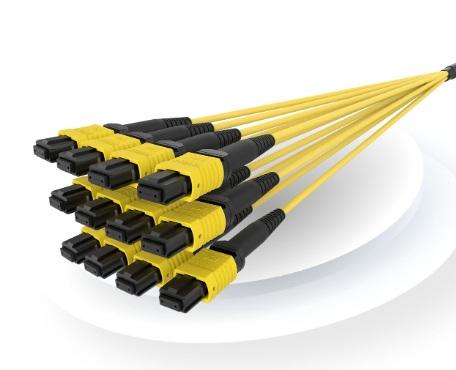
High-density data centers require careful coordination between computing equipment and the physical infrastructure that connects it. As more servers, switches, and storage platforms are placed within limited spaces, traditional one-fiber-at-a-time connectivity can become increasingly difficult to organize. FSG Network provides fiber-optic connectivity products for modern network environments, supporting applications where compact, precise, and structured optical connections are needed.
An mpo connector provides a multi-fiber interface that can accommodate several optical fibers within a single connection point. This design can be valuable in dense data center environments because it allows network designers to manage multiple optical channels without creating a separate connector arrangement for every fiber. When incorporated into an appropriate cabling architecture, MPO technology can contribute to better space utilization and more systematic connectivity.
The Challenge of High-Density Data Centers
High-density facilities can contain thousands of optical connections. These links may connect servers to switches, switches to distribution systems, or different network zones to centralized equipment.
As the number of connections increases, physical organization becomes just as important as transmission capability. Overcrowded pathways can make it harder to trace cables, perform maintenance, and introduce new equipment.
A compact multi-fiber approach can help address some of these physical challenges.
How MPO Connectors Support Compact Infrastructure
MPO connectors are designed to bring multiple fiber positions together within one interface. Instead of requiring numerous individual connectors, several fibers can be handled as a group.
This can reduce connector count and support more efficient use of patching and equipment areas. For data centers with limited rack space, the physical compactness of MPO technology can be an important consideration.
The number of fibers supported depends on the specific MPO configuration being used.
Connection Density and Rack Space
Every rack and cabinet has physical limitations. As network equipment becomes more powerful, the number of required connections can increase even when the available space remains unchanged.
MPO connectivity can help network planners accommodate multiple fiber channels through compact interfaces. This can leave more room for structured routing and make dense installations easier to organize.
Space efficiency is particularly relevant when data center operators are upgrading existing facilities rather than constructing entirely new sites.
MPO and Structured Cabling
An MPO connector is often used as part of a broader structured cabling system. It can be paired with trunk cables, patch panels, adapters, and other fiber components to create defined connection pathways.
This approach allows network designers to separate backbone connectivity from equipment-level connections. Such organization can make infrastructure easier to document and modify as requirements change.
A structured design should account for connector type, fiber count, polarity, and equipment interfaces from the beginning.
Importance of Fiber Alignment
Multi-fiber connectivity requires accurate alignment across several optical channels. MPO assemblies commonly use MT ferrules to position the fibers precisely.
The ferrule helps keep corresponding fibers in the correct locations when connectors are joined. Manufacturing accuracy is therefore an important consideration when selecting multi-fiber assemblies.
Poor alignment or damaged connector surfaces can affect optical performance, which is why inspection and proper handling are important.
Managing MPO Polarity
Polarity is a critical part of multi-fiber network planning. Optical signals need to travel from the appropriate transmitting channel to the corresponding receiving channel.
Different MPO systems can use different polarity methods. Data center designers should establish the required configuration before purchasing and installing components.
Documenting fiber mapping and connector orientation can help technicians troubleshoot and modify the system more efficiently.
Supporting Network Upgrades
Data center infrastructure must often accommodate technology changes. Equipment may be replaced with higher-capacity switches, additional servers may be installed, or network architecture may be redesigned.
A well-planned MPO system can provide a structured foundation for these changes. Multi-fiber assemblies can consolidate groups of connections and make it easier to maintain consistent cabling patterns.
However, future compatibility should be considered before selecting connector and cable configurations.
Installation Best Practices
Correct installation is essential for maintaining reliable optical connectivity. MPO connector end faces should be inspected and cleaned before mating because contamination can affect optical performance.
Cables should also be routed carefully and kept within recommended bend-radius limits. Avoiding excessive pressure and mechanical stress can help protect fiber assemblies.
Once installation is complete, optical testing can verify that connections perform within the required specifications.
Applications Within Data Center Infrastructure
MPO technology can be used in several parts of a high-density data center. It may support backbone links, inter-rack connections, patching systems, and connections between distribution areas.
The exact use depends on the network architecture and equipment. Some environments may require different fiber counts or connector configurations depending on their transmission requirements.
Choosing a standardized approach across suitable parts of a facility can simplify infrastructure management.
Selecting an MPO Connector Solution
Before selecting an MPO component, data center operators should evaluate several specifications. These can include fiber count, fiber type, polarity, connector gender, insertion loss, return loss, and compatibility with connected equipment.
Cable length and physical routing requirements should also be considered. The connector should not be evaluated independently from the cable assembly and optical hardware it will support.
FSG Network for High-Density Fiber Infrastructure
Organizations planning dense fiber deployments can evaluate suppliers according to technical specifications, product consistency, and application suitability. FSG Network focuses on fiber-optic connectivity products for high-density and performance-oriented network environments.
Its products can be considered for data centers and other facilities where efficient optical connectivity is required. Businesses should match individual components to their equipment, network topology, and planned capacity.
Preparing for Future Density
Data centers are likely to continue increasing equipment and connection density as computing requirements expand. Infrastructure designed only for today's connection count may become difficult to scale later.
A carefully planned multi-fiber architecture can provide a more adaptable physical foundation. MPO technology can help consolidate multiple optical channels while supporting structured cabling layouts.
Future fiber requirements, equipment upgrades, and pathway capacity should be considered during the initial design.
Conclusion
High-density data centers need connectivity systems that balance optical performance with physical efficiency. MPO technology provides a compact method for handling multiple optical fibers through a single interface, making it useful for structured data center environments.
Successful deployment requires more than choosing a connector. Fiber type, polarity, alignment, cable construction, installation practices, testing, and equipment compatibility all need to be considered together.
For organizations developing high-density fiber infrastructure, an mpo connector can help create a more compact and organized connectivity architecture. With specialized products from FSG Network, businesses can evaluate fiber-optic components according to their current requirements while considering future data center expansion.
 Deutsch
 English
 Arabic
 French
 Spanish
 Portuguese
 Turkish
 Dutch
Dutch
 Italiano
 Russian
 Romaian
 Portuguese (Brazil)
 Greek
Greek